Starter on AR-15 Problems

There are a few areas of consideration when assessing issues with the AR-15 style firearms.

1.) Is the firearm new from a factory? If yes, is it a reputable manufacture, or fly by night?

2.) Is it a new home built? Is this the builders 1st or 50th?

3.) Finally, is this a used rifle that has been fired many times and just started to malfunction?

Ammo and routine maintenance are other items that should be looked at for all 3 considerations. Is it good quality ammo? Hand-loads? Cheap Ammo? When was the last time the rifle was cleaned?

First things first, clear the weapon, make sure it is safe and preform a function check. If the function check fails and it is a new rifle, you might want to send it back. If it is a new home built check that the springs are installed and installed correctly, in the right direction and place. If it is used and just started happening, check for spring wear and replace as needed. The hammer spring is a common culprit of many issues to include intermittent firing, misfires and light fires.

Bad gas can cause a lot of problems like short stroking which can be caused by an improperly staked bolt carrier key coming loose. Another spot to look is if the gas rings are missing or damaged, this is usually on the used rifles. On home built rifles especially, make sure the inlet and the gas port are properly aligned, tightened, and the correct tube is being used. An incorrect or misaligned gas block is a common culprit.

A failure to eject scenario can be cause by extractor and ejector springs. Would not hurt to have a few of those around the shop. Weak springs can cause the spent casing to get caught in the ejection port causing a stove pipe situation. Tell tail signs of ejector/extractor issues are dented cases, round rim markings like scratches or damage to the stamping at the bottom of the round. Inconsistent round ejection is another sign, if you test fire the weapon 3 times and the brass ejects to 3 very different angles, you have an issue. All 3 rounds should end up in a pile close to each other.

Talk to the person bringing you the rifle with the 3 questions above in mind. This will help you narrow down the issue and get the weapon back to your customer quickly. The AR-15 is a reliable weapon and with some initial questioning and test fires as required, you can quickly diagnose the issues and fix it.

REF:

YouTube – Various Michael Bell videos

AR-15 Parts and Functions

The function of the LOWER RECEIVER ASSEMBLY is to house the below items. This is also where the main difference between the AR-15 and the M16 is. The fire control group of the M16 allows either 3 round burst or full automatic fire in addition to safe and semi-auto fire. The AR-15 does not, it has only Safe and Semi firing options.

Lower Receiver – The lower receiver is the part of your rifle that is generally considered to be the firearm itself by the ATF. The lower receiver is where you’ll find your weapon’s serial number. This is also the only part that you will need to get from your local FFL.

Fire Control Group – The Fire control group consists of the trigger and the hammer of your AR-15, as well as other necessary housing components.

Receiver Extension and Buffer Assembly – As part of your rifle’s recoil system, this assembly helps absorb a lot of that kick, making a better shooting experience.

Magazine Catch Assembly – to secure the magazine and allow release when finished.

Bolt Catch Assembly – Is there to lock the bolt to the rear either manually or automatically when the last round is fired and the magazine is empty.

Stock – The butt stock is the part of your AR-15 that connects to the rifle’s firing mechanisms.

Pistol Grip – The pistol grip attaches to the lower receiver, giving you a firm handle of your rifle.

Takedown and Pivot Pin Assemblies – The takedown and pivot pins and detents lock the upper and lower receivers together.

The UPPER RECEIVER ASSEMBLY house the below assemblies and are the same for AR-15 and M16 rifles.

Upper Receiver – The upper receiver is the part that contains the bolt carrier group and charging handle. The barrel and the forend are also attached to the upper receiver.

Barrel Assembly – The barrel will play a huge role in your accuracy on the range or in the field. There are many different calibers and lengths available.

Bolt Assembly – Houses the extractor and ejector assemblies. It locks the breech and initiates the ignition of the cartridge

Extractor Assembly – removes the round from the chamber

Ejector Assembly – Ejects the round from the breech

Bolt Carrier Assembly – consists of the firing pin, bolt, cam pin, extractor and gas key. At a very basic level, the bolt carrier group is responsible for loading your rifle, making sure bullets are fired correctly and ejecting spent rounds from the chamber.

Gas System – Your rifle relies on gas pressure to operate in the way that it’s designed. For the most part, gas blocks are installed on the barrel, inside the handguard. The gas tube connects to the block and the upper receiver.

Charging Handle Assembly – A charging handle is the part that pulls your bolt carrier group to the rear when you need to chamber a round or to clear a malfunction.

Forward Assist Assembly – If for whatever reason your bolt isn’t operating properly and won’t close all the way, the forward assist should help make sure it goes back into place.

Ejection Port Cover Assembly – When it’s closed, the ejection port cover will prevent dirt, dust and other debris from dirtying your rifle, as it keeps both the bolt carrier group and the upper receiver clean

Handguard(s) Assembly – The primary uses of rail systems and handguards is to protect your hand from this heat so you can enjoy a comfortable shooting experience.

Sights – Front and rear sights are alined to aim the rifle.

Magazine – You can get different sized magazines, but it’s important to keep in mind that laws for the size of magazines can vary from state to state.

When all of the above are assembled correctly it will allow for the eight cycles of firing:

1. Firing

2. Unlocking

3. Extraction

4. Ejecting

5. Cocking

6. Feeding

7. Chambering

8. Locking

All of the above parts and systems have many different variants. This is one of the great things about this platform. You can have barrel lengths from 24 to 7.5 inches with each having different twist rates. Handguards, Stocks and triggers also come in a wide variety of options. Bolt on additions seem to be only limited by your wallet.

REF:

U.S. Army TM 9-1005-319-10

https://www.wingtactical.com/parts-of-an-ar-15/

https://youtu.be/-UYctFUXuCM

Maintenance and Troubleshooting of AR-15 Type Rifles

Field Stripping can be done with what everyone should have out in the field, a bullet. Might not be the best tool, but in a pinch it will do everything you need to do. First thing you need to do is to remove the magazine, clear the weapon, ensure the bolt carrier group is forward and the safety is on. Set the firearm so the barrel is pointer to the right. Push the rear take down pin towards you, it will not come all the way out and you should feel the upper and lower separate when it is pushed far enough. Now do the same for the front take down pin. You can now separate the upper from the lower receiver.

To disassemble the upper receiver pull the charging handle back and remove the bolt carrier group. The charging handle will drop down as you continue to pull and can be removed from the receiver. On the left rear side of the bolt carrier, you’ll see what looks like a cotter pin, this is the firing-pin retaining pin. Pull the pin straight out and the firing pin will drop out of the bolt. Turn and remove the cam pin the bolt will now slide out. Make sure the gas ring gaps are not lined up and are in good shape. Next remove the extractor pin, the extractor will then come out. Inspect the extractor assembly spring and rubber piece to ensure good working order. Clean everything up with a small cleaning brush and solvent then wipe down with CLP. Re-assemble the bolt by putting the extractor and spring assembly back in the bolt and inserting the extractor pin, return the bolt to the carrier and insert the cam pin and rotate, insert the firing pin and the retaining pin. Run a couple swabs with solvent followed by CLP down the barrel. Insert the bolt group and charging handle to the upper receiver.

The lower assemble contains the trigger group, buffer system and the stock. To remove the buffer and spring, push in on the buffer and depress the retainer pin. The buffer and spring will come out. Clean the buffer assembly, spring, and tube with a swab dampened with CLP. The trigger assembly will require some grease at the pivot points. Inspect the stock for cracks and other damage.

The AR-15-style firearm is a versatile, modular, and easy to maintain rifle that with a little maintenance will last you a very long time.

REF:

U.S. Army TM 9-1005-319-10

Pistol vs Steel

Published on Jul 30, 2017


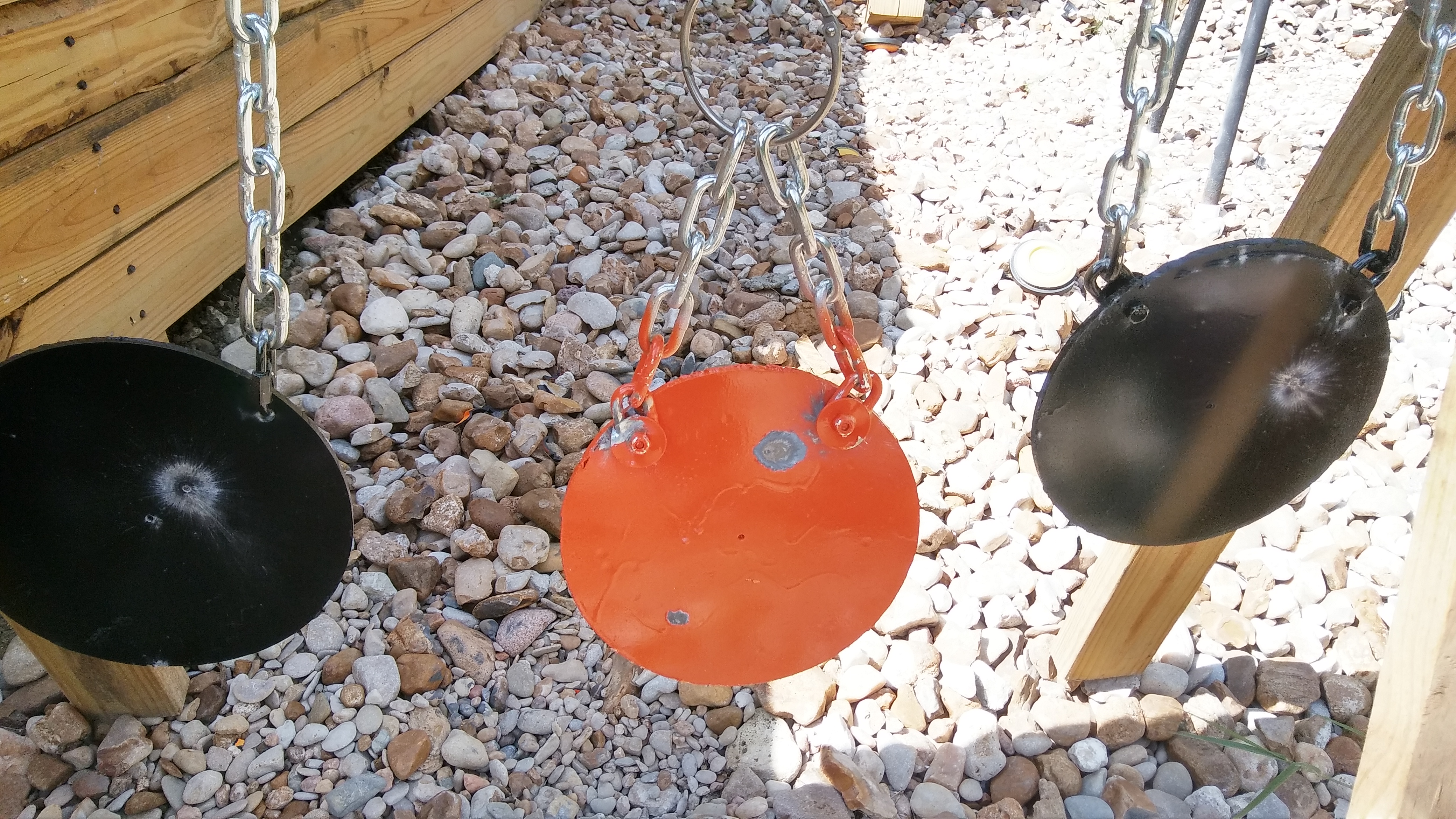
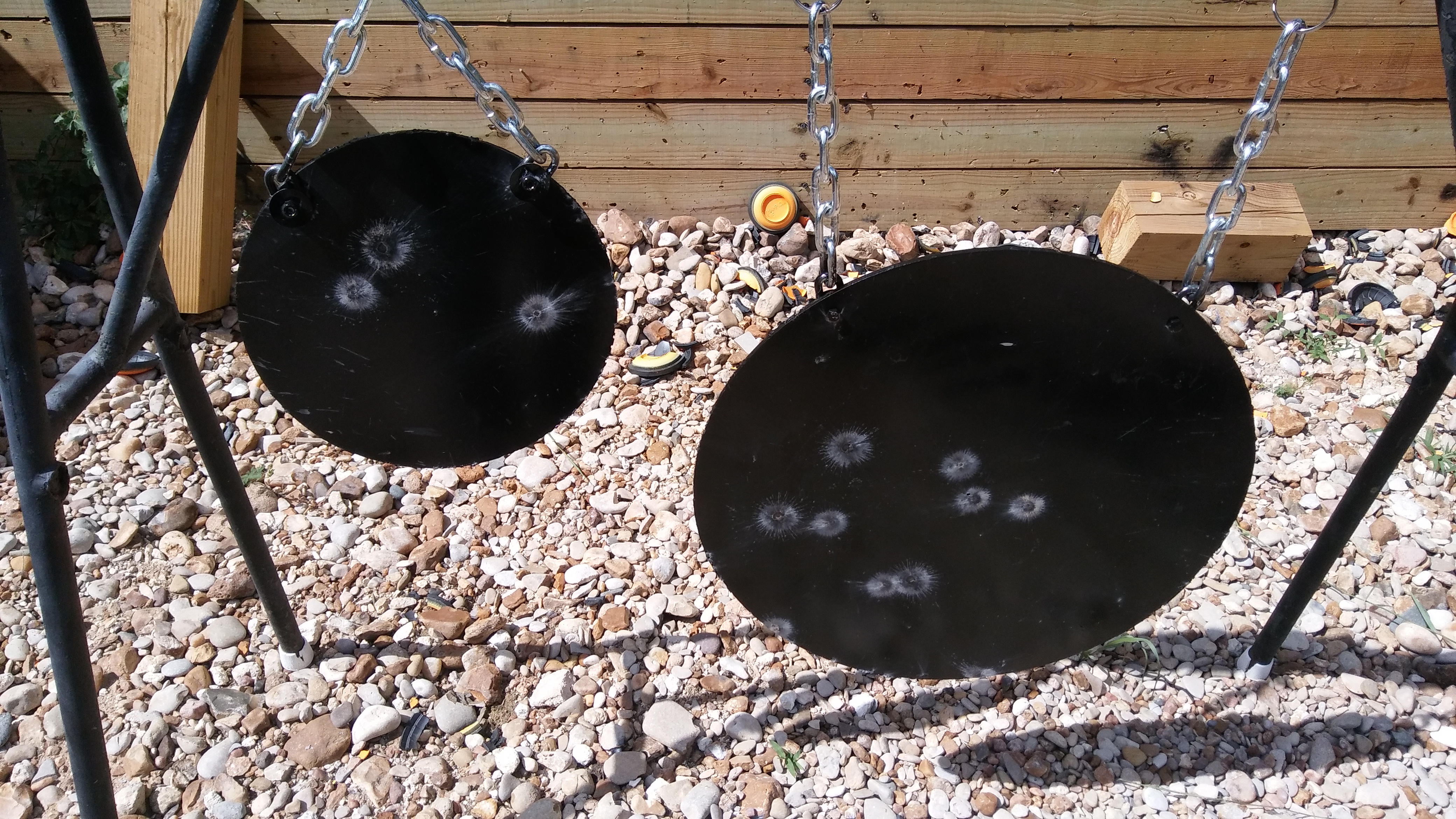
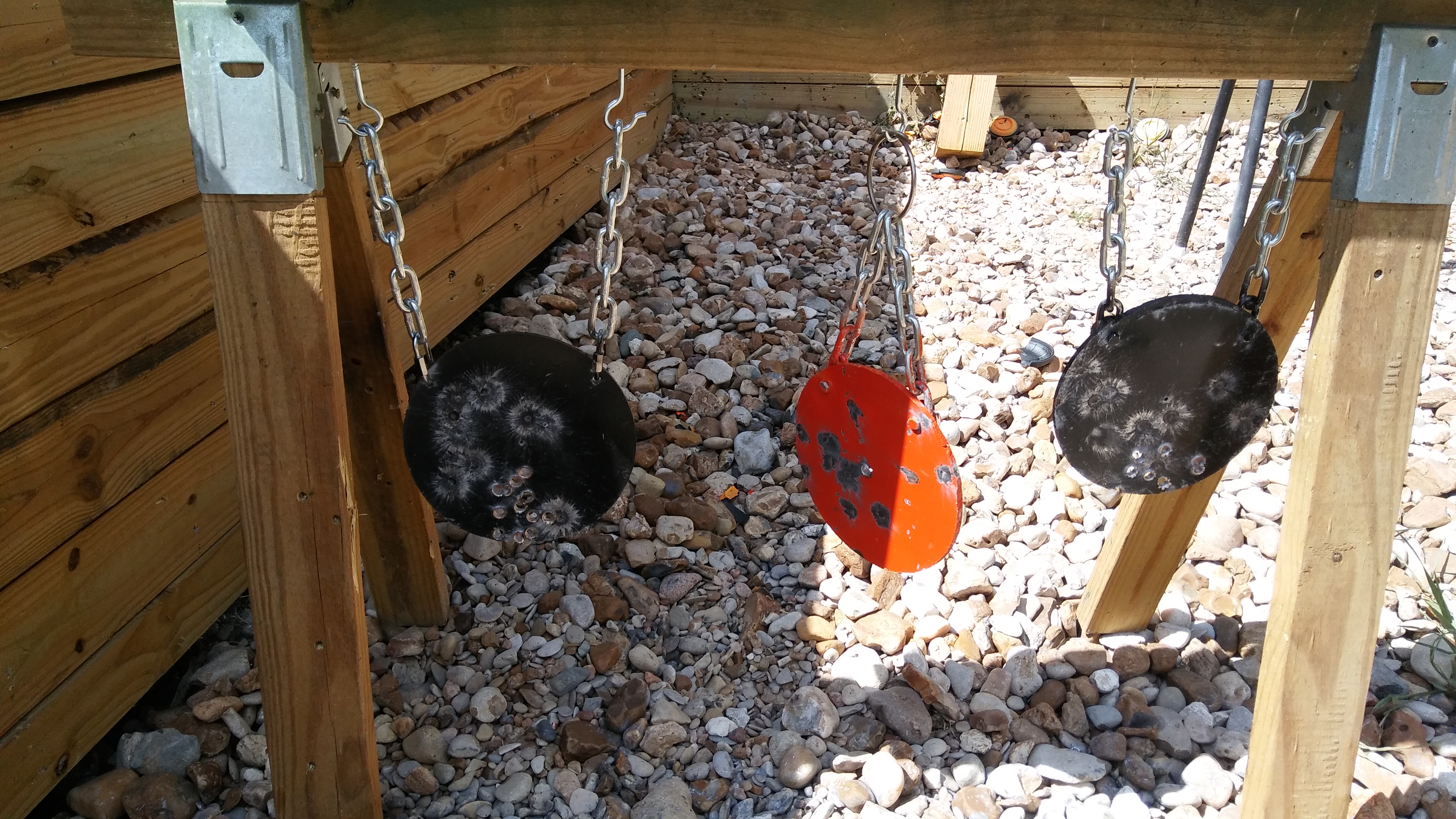
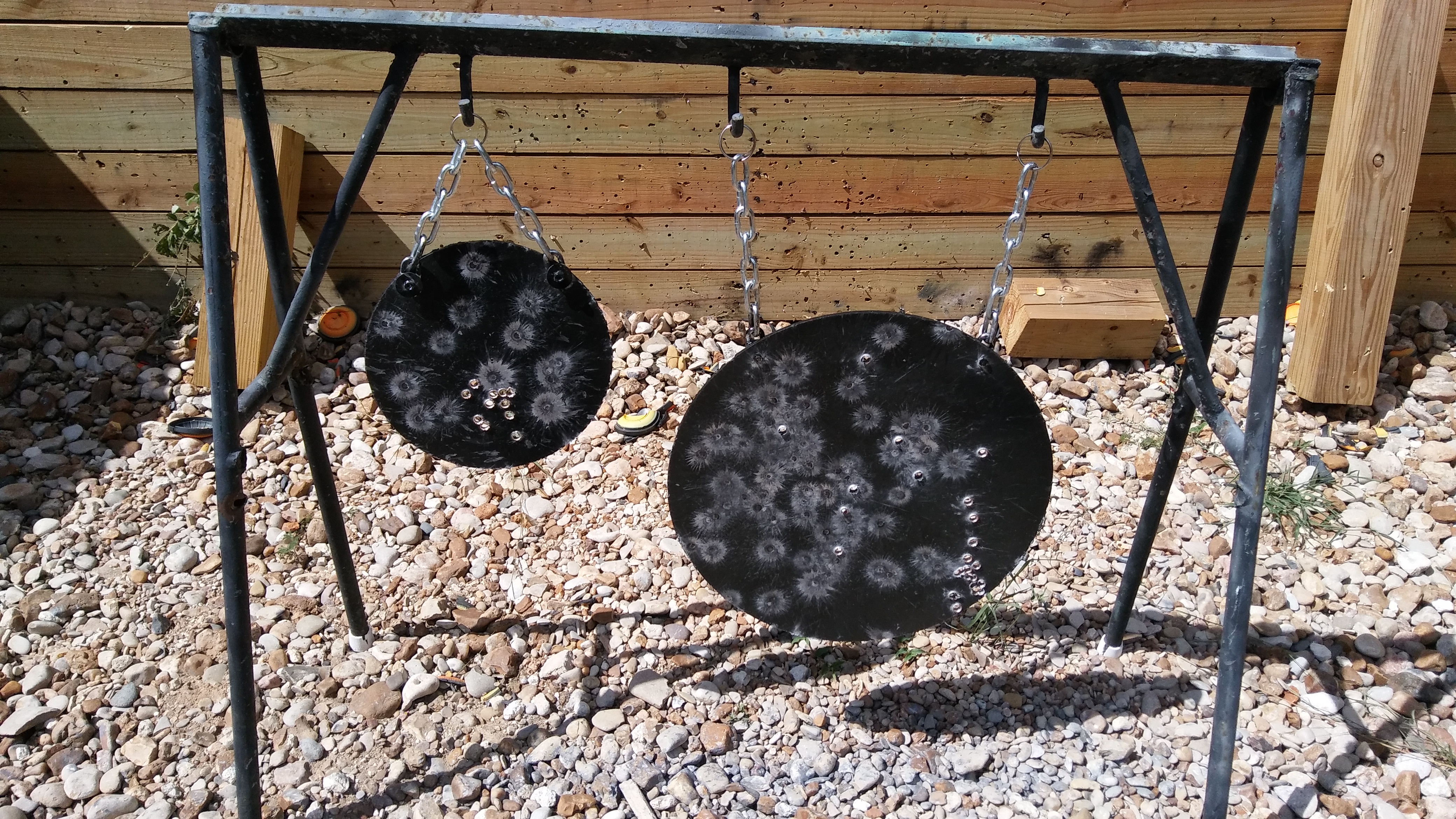
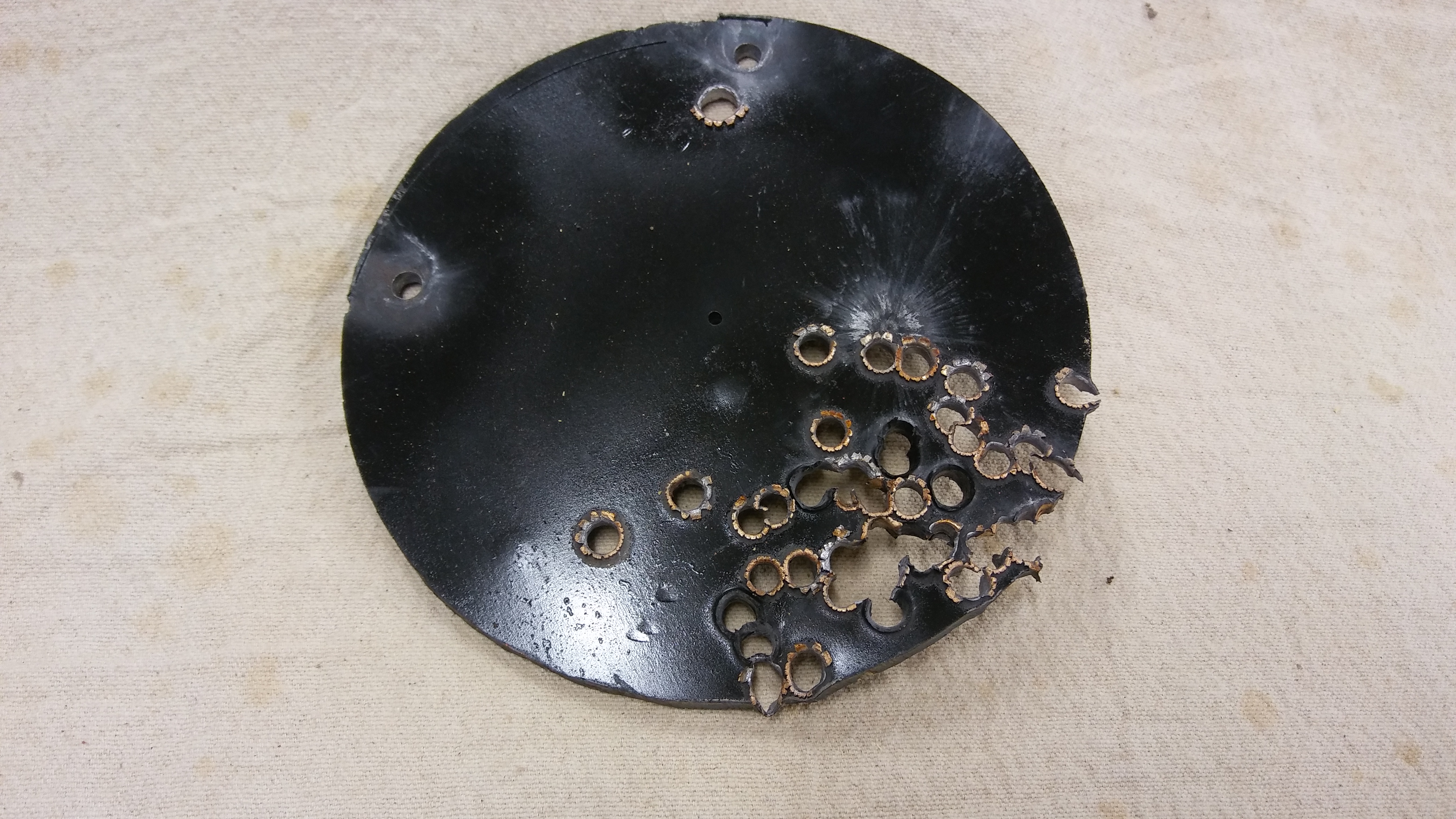
We got our steel targets from MOA targets . Man is shooting steel fun! We got 1 – 1/4 inch AR400 and 1 – 3/8 AR500 targets. I threw one of the targets I cut into the mix as well. All 8 inch. By the way, the AR400 I thought I had is mild steel, you will see as the video series progresses.

In a nut shell all 3 handled pistol up to .45 at 10 to 15 Yards without penetration. The Mild had some dents, AR 400 and AR 500 nada.

Here is the Color Code:

Black = Mild Steel, We cut
Yellow = MOA Targets AR500
Orange = MOA Targets AR400


Prohibition on Discharge of Firearms – Bastrop County Texas

12-19-16:     We don’t want to break any laws. So we went to the Bastrop County courthouse and asked what the law was to shoot on our property. Now, everyone around us shoots but that does not make it legal.

The way I read it you need either 5 acres and / or a Federal Firearms License (FFL). I am no lawyer so I will be checking with one and the Sheriff.

12-20-16:    From my Lawyer: “The prohibition appears to be limited to subdivisions with lot sizes less than 5 acres.  However, the definition of “Regulated Lot” is confusing.  I recommend writing a letter to the Bastrop County Attorney, which includes detailed information about your lot, a requesting their opinion.”

I will be writing a letter to the Bastrop County Attorney and posting what I find here.

Here is a copy of what the County Commissioners gave us:

ATTACHMENT “A”

PROHIBITION ON DISCHARGE OF FIREARMS

SECTION I

AUTHORITY

1.01     These regulations are adopted by the Commissioners Court of Bastrop County, Texas acting in its capacity as the governing body of Bastrop County, Texas. The authority of Bastrop County to adopt these regulations is V.T.C.A. Local Government Code § 235.022 as amended.

SECTION II

ADMINISTRATION

2.01    Commissioners Court hereby designates the Sheriff of Bastrop County, Texas or any constable of any precinct of Bastrop County, Texas as well as any other peace officer certified by the State of Texas to enforce these regulations.

SECTION III

AREA COVERED BY REGULATIONS

3.01     These regulations only apply to a subdivision all or part of which is located in the unincorporated area of Bastrop County. It is affirmative defense to prosecution under this Order that the violation occurred in a subdivision for which a plat is not required to be prepared and filed under V.T.C.A. Local Government Code, Chapter 232.

SECTION IV

DEFINITIONS

4.01 As used in these regulations:

a. “Commissioners Court” means Commissioners Court of Bastrop   County, Texas;

b. “County” means Bastrop County, Texas;

c. “Firearms” means any device designated, made or adapted to expel a projectile through a barrel, tube, or similar device by using the energy generated by an explosion or burning substance or any device readily convertible to that use.

d. “Regulated Lot” means a tract of land or a lot that is:

1.) within the unincorporated areas of Bastrop County and for which Chapter 232 of the Local Governmental Code requires a plat to be prepared and filed; and

2.) within a subdivision of five (5) or more contiguous lots each of which lots are less than five (5) acres, both individually and including any contiguously owned lots or tracts as reflected by the records of the Bastrop County Clerk or the Bastrop Central Appraisal district.

e. “Residence” means any home, house, apartment, or other structure, used full time or part time, as a dwelling, and which is not the dwelling of the person discharging the firearm; and

f. “School” means a private or public elementary, secondary, or high school.

SECTION V

PROHIBITION

5.01     The discharge of firearms is prohibited within a regulated lot.

5.02     A person commits an offense if the person intentionally or knowingly discharges a firearm that is prohibited by this Order within a regulated lot and to which no exception applies.

5.03     A violation of these regulations is a Class C Misdemeanor. If it is shown on the trial of an offense under this Order that the person has previously been convicted of an offense under this order, the offense is a Class B Misdemeanor.

SECTION VI

EXCEPTIONS

6.01 The prohibition in this Order does not apply to the discharge of a firearm:

a. if used by a federally licensed firearm dealers, gunsmiths, persons that are licensed or certified by the state, or business establishments that operate an area for the discharge or other use of firearms for silhouette, skeet, trap, black powder, target, self-defense, or similar recreational shooting, if the operations is in existence before the effective date of this order or if a school or residence locates within the distances, noted in section 5.01 b, of the lot on which the area is located unless specifically authorized by the Commissioners Court at a future date;

b. if reasonably necessary to protect one’s self, other persons, or property, from imminent harm, in accordance with state law;

c. if necessary to shoot an animal reasonably believed to present, under the circumstances, the possibility of danger to a person or to a person’s property;

d. if blank cartridges are used for a salute at a military memorial, funeral, or other similar ceremony;

e. if used by a peace officer certified by the State of Texas; or

f. if prior consent is given by the Commissioners Court.

6.02     This Order does not prohibit or restrict the transfer, ownership, possession, manufacture, maintenance, repair, or transportation of firearms.

SECTION VII

EFFECT ON STATE LAW

7.01     These regulations do not legalize anything prohibited under the Penal Code or other state law. These regulations do not limit any defense found in the Penal Code.

SECTION VIII

SEVERABILITY

8.01     If any provision of these regulations or its application to any person or circumstances is held invalid or illegal for any reason, the invalidity or illegality does not effect any other provisions or applications of these regulations which can be given effect without the invalid or illegal provision or application, and to this end the provisions of these regulations are declared to be severable.

SECTION IX

EFFECTIVE DATE

9.01     This Order becomes effective on the date of approval of this Order.

Approved in Commissioners Court on June 25, 2007.

Copy Protected by Chetan's WP-Copyprotect.